
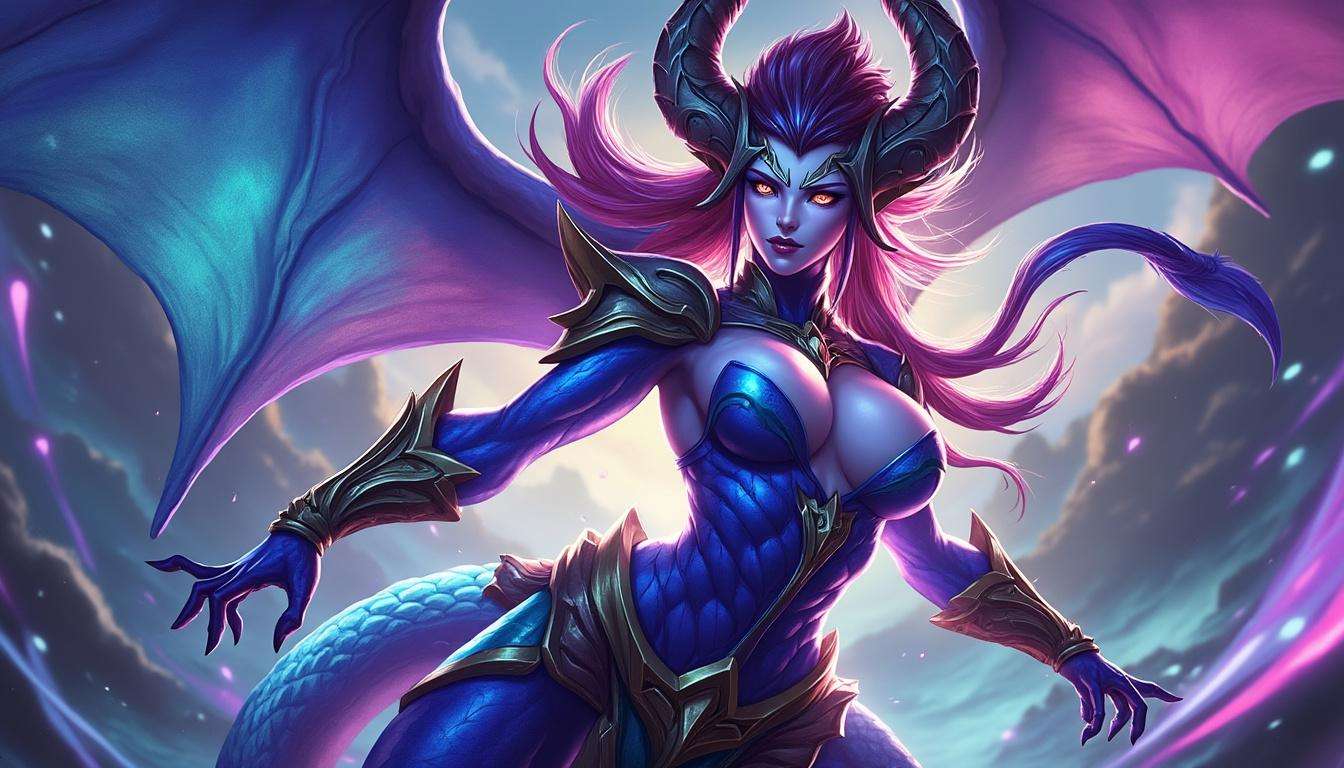
The Shyvana VGU finally arrives in League of Legends with a full rework for the Dragon Warrior. Riot Games turns one of the oldest AP bruisers into a modern, readable, and aggressive threat on Summoner’s Rift.
League Of Legends Shyvana VGU Overview
The new Shyvana VGU targets two clear goals in League of Legends. First, the rework keeps her identity as a relentless Dragon Warrior who dives into fights. Second, it updates visuals and gameplay so she fits the current MOBA meta instead of feeling like a relic from early seasons.
Her Character Update follows Riot Games’ usual VGU approach. The kit keeps the core fantasy of human form for chasing and dragon form for frontline impact, but every spell now has clearer ranges, timings, and counterplay. Shyvana mains from every region gave feedback during development, which shaped many of the final decisions.
What A VGU Means For Shyvana In League Of Legends
A Visual and Gameplay Update in League of Legends replaces old animations, effects, and ability designs without deleting the champion’s soul. For Shyvana, this VGU means sharper dragon animations, reworked spell indicators, and a clearer rhythm between farming jungle and forcing fights around objectives.
Previous VGUs like Udyr and Skarner showed how deep Riot Games goes when reimagining a champion. Shyvana now joins that list after years of sitting near the top of community polls. Her new kit and silhouette make her easier to read in teamfights while still feeling like the aggressive diver fans remember.
Anyone who wants a wider context on how League of Legends evolves with big overhauls can check broader breakdowns of the game’s direction on sites like this League of Legends overview, which tracks design trends across seasons.
Shyvana Rework: Core Gameplay Identity
The Shyvana rework keeps her role as an aggressive AP or AD bruiser who thrives around dragons and skirmishes. However, Riot Games refined how she generates Fury, when she wants to transform, and how she threatens priority targets during fights.
A fictional Diamond jungle player, “Rivenhart,” helps illustrate the changes. Before the VGU, Rivenhart locked Shyvana when enemy teams had low CC and weak early junglers, then powerfarmed to level six and spammed dragon form dives. After the rework, the same player feels encouraged to fight earlier, track objective timers more tightly, and use her new tools to contest vision instead of farming in isolation.
Updated Dragon Warrior Fantasy
The Shyvana VGU pushes the Dragon Warrior fantasy harder. Human form focuses on closing gaps, stacking damage, and building Fury. Dragon form becomes a short, explosive window where every action matters.
This identity shift shows up in three ways. First, she has more defined spikes around objectives, especially elemental drakes and Baron. Second, her combo patterns encourage players to weave in and out of fights instead of pressing R and hoping to win. Third, her visuals finally match a modern League of Legends MOBA champion, with clear readability in crowded 5v5 battles.
For players who want an even deeper breakdown of her jungle role and dragon synergy, guides such as this Shyvana dragon jungle analysis compare her new jungle pathing and objective control to the pre-VGU version.
League Of Legends Shyvana VGU: Ability And Gameplay Changes
The updated Shyvana gameplay focuses on three pillars. Her base form gives consistent damage and mobility. Her dragon form amplifies area damage and zone control. Her passive and numbers tie everything to objective play and smart aggression.
Exact numbers already shifted on the PBE before hitting live servers, but the design direction stayed clear. Shyvana is rewarded for contesting dragons, staying active on the map, and timing transformations around major fights instead of farming for half the game.
Passive: Aggression Around Dragons
Shyvana’s passive still connects her power to dragons, but the rework adds more precise rules. Her stats now scale in a predictable way when her team secures drakes, and she gains extra incentives to pressure the area before spawns. The goal is to turn every dragon into a mini-mission for Shyvana players.
For Rivenhart, this transforms match planning. Instead of full clearing every camp on spawn, he now plans routes that end on river vision, invades enemy jungle before dragon spawns, and uses new tools to force skirmishes. The passive pushes Shyvana to behave like a proactive Dragon Warrior instead of a passive powerfarmer.
Human Form: Chase And Pressure
In human form, the Shyvana rework sharpens her role as a relentless chaser. Her abilities give more targeted tools to stick to champions, mark priority targets, and build Fury quickly through smart spell usage and attacks.
One common pattern in the VGU version looks like this for Shyvana jungle mains:
- Use enhanced gap closing to start a skirmish from fog of war.
- Tag the main target with a skill that rewards staying in range.
- Weave auto attacks and short cooldown abilities to stack damage and Fury.
- Transform into dragon form mid-fight as soon as the Fury bar fills to flip the fight.
This loop rewards game knowledge and pathing rather than brainless farming. Shyvana players who track waves, vision lines, and summoner spells gain a big edge during early and mid game.
Dragon Form: Area Control And Burst Windows
Dragon form in the Shyvana VGU is no longer a blunt “press R and go in” tool. Riot Games shaped it as a temporary state with strong crowd control, better hitboxes, and visual clarity that tells both teams what will happen next.
Her engage keeps the iconic long-range flight, but the landing zone is easier to read, and enemies see a clear warning before impact. Follow-up spells emphasize area control, walling off retreats, and dealing sustained damage over a smaller window instead of an extended brawl that drags for too long.
In practice, this means moments where Shyvana starts a fight at dragon pit, takes off from river bush, slams into the backline, and locks a carry in a focused area. Well-timed dragon form turns around Baron contests or mid lane sieges and turns her into the centerpiece of the team comp.
Visual Updates And Character Design For The Dragon Warrior
Visuals are a big part of the Character Update for Shyvana. Her old model came from an era where League of Legends champions had simpler shapes and lower fidelity animations. The VGU aligns her with modern designs introduced over the last few years.
The human form silhouette has sharper armor, clearer Demacian influences, and more dragon elements woven into her gear. In dragon form, wings, claws, and fire effects are redesigned to stand out from other champions’ abilities. This makes her easier to identify in hectic ARAM or 5v5 scenes.
Skin Updates And Visual Clarity
Every Shyvana skin received matching VGU upgrades. Particle effects for skins like Ice Drake and Darkflame gained distinct colors and cleaner shapes, while legacy skins keep their fantasy but lose the outdated look. Animations now sync better with hitboxes, which improves perceived fairness in fights.
Old Shyvana players will notice new interactions with the map and with other Demacian champions. The For Demacia 2026 cinematic already teased this direction, showing her alongside icons like Garen and Lux with a stronger thematic fit.
Impact On MOBA Meta And Jungle Game Design
The Shyvana VGU also speaks to Riot Games’ broader approach to MOBA and game design. Older champions built around simple stats and point-and-click spells struggle when new releases introduce mobility, burst, and complex utility. Without reworks, the gap in play patterns grows.
By tying Shyvana’s strength to map events and precise timing, the rework aligns her with modern League of Legends pacing. Matches now encourage her to play for early river control, invade windows, and synced rotations with mid lane, rather than hiding in the jungle.
Meta Role And Team Comps
On live servers, the updated Shyvana slots best into team comps that lack a traditional frontline but want a durable dive threat. Players pick her when the draft needs someone to start fights, absorb cooldowns, and punish teams that clump around objectives.
For example, Rivenhart often pairs Shyvana with ranged solo laners and strong enchanter supports. The team peels early, buys time for Shyvana to hit transformational spikes around second or third dragon, then groups to leverage her dragon form in tight jungle corridors.
Multiple analysts tracking the rework across patches also compare her to other objective-focused junglers. Articles such as this Shyvana rework feature highlight how she stacks up against favorites like Graves, Viego, or newer AP divers.
Why The Shyvana VGU Matters For League Of Legends
The Shyvana VGU is more than a simple rework of a single champion. It shows how Riot Games tries to respect old mains while updating the game for new players who started on later champions with higher standards for visuals and depth.
League of Legends remains one of the longest-running competitive titles, and old designs age fast next to modern releases. Refreshing a classic Dragon Warrior through a complete Character Update helps the game feel consistent, keeps long-time players invested, and sets expectations for future VGUs.