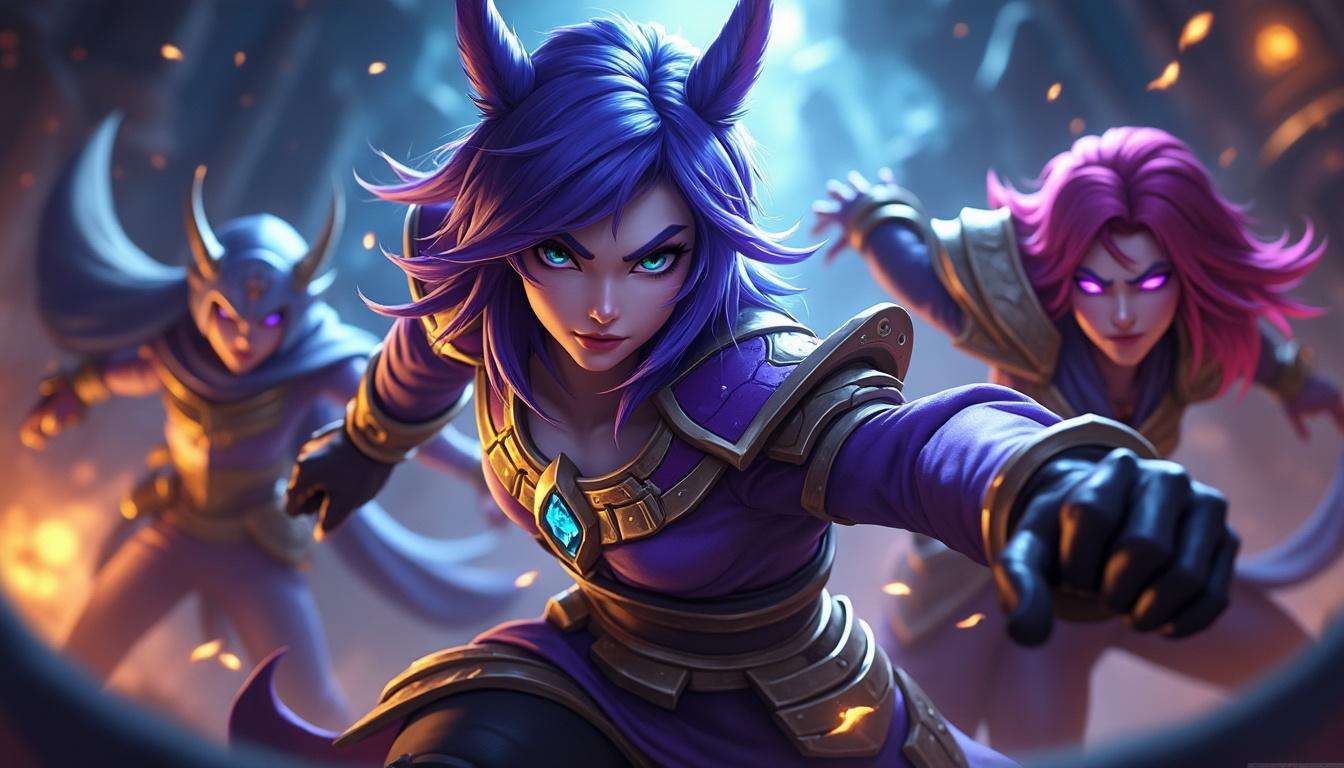
The League of Legends MMO project is alive again and moving forward. After years of silence and a full reboot, Riot Games has shared a meaningful update through a key hire with deep MMO experience.
League Of Legends MMO Update Brings New Leadership
The biggest news for the League of Legends MMO update is the arrival of former Blizzard producer Raymond Bartos at Riot Games. He now serves as Senior Game Producer on the project, after years working on World of Warcraft, one of the most influential online games in history.
This move follows a full development reset in 2024, when Riot decided to rethink the design of the League of Legends MMORPG instead of quietly killing it. Hiring a veteran with large-scale multiplayer and expansion experience signals long-term commitment rather than a side project that stays stuck in pre-production.
Bartos described the team as an “inspiring group” and stressed the goal of delivering an MMO experience players enjoy. For a League audience used to competitive pressure, that line hints at a strong focus on day-to-day fun instead of only endgame grind.
What This MMO Update Means For Development
For a project that dropped off the radar after its 2020 announcement, this update does more than confirm the game still exists. A Senior Producer with WoW credentials usually handles large cross-team coordination, live-service planning, and feature roadmaps. That kind of profile arrives when a studio wants to move from concept talk to real gameplay structure.
After the reboot, the League of Legends MMO likely needed someone with experience in long-term progression systems, class balance, and expansion pipelines. WoW veterans know how dangerous early design mistakes become once millions of players enter an online game, so bringing that knowledge into Runeterra helps avoid issues that haunt an MMO for a decade.
This development phase still sits far from a beta, but it looks more organized than during the post-2020 silence. When Riot hires high-profile producers instead of slowly shrinking the team, it points toward active investment.
How The League Of Legends MMO Fits Riot’s Future
The League of Legends MMO does not exist in a vacuum. Riot Games is turning Runeterra into a broader ecosystem of multiplayer titles and new content across genres. The upcoming 2XKO, a tag-team fighting game set in the same universe, reaches players who prefer tight duels instead of long sessions in an MMO world.
On top of that, Riot already teased a massive League of Legends update for the core MOBA targeted for 2027, including a new integrated client and visual overhaul. These changes push Summoner’s Rift closer to modern standards and help onboard new players who discover the franchise through other games and shows.
Think about a new player who enters through 2XKO or Arcane. A few years from now, they might move between online game experiences: the classic MOBA, a fighting title, and a full MMO set in the same lore-rich world. That cross-pollination keeps the IP strong and gives Riot more room for bold patches and reworks.
Runeterra As A Long-Term MMO Setting
Runeterra offers regions perfect for MMO zones, raids, and story arcs. Demacia and Noxus fit faction tension, the Shadow Isles suggest high-level new content with strong rewards, and Piltover & Zaun lend themselves to tech-focused dungeons or co-op missions.
Esports history also matters here. The global impact seen in events analyzed in pieces like this deep dive on Worlds and KeSPA-era growth shows how intense League fandom becomes when the game world feels alive and connected. An MMO gives that audience a social hub instead of limiting them to a match queue.
The more Riot deepens Runeterra through games, events, and crossovers, the easier it becomes to support long-term expansions for the League of Legends MMORPG without running out of ideas.
MMO Gameplay Expectations After The Reset
Riot has not shown public gameplay footage of the League of Legends MMO yet. No combat clips, no UI reveals, no zone tours. After the 2024 reset, the team likely focuses on core systems like combat feel, class identity, and early-game flow before anything hits a trailer.
However, the broader League design philosophy gives clues. The studio knows how to create sharp ability kits, clear counterplay, and readable team fights. An MMO built by this group will aim for immediate clarity in combat, strong role definition, and meaningful decision-making instead of pure stat checks.
Balancing hundreds of champions in the MOBA already forced Riot to build strong data pipelines and patch rhythms. Those habits transfer well to large-scale multiplayer content, where classes, items, and raids need frequent tuning through each major patch.
What League Systems Might Carry Into The MMO
While nothing is confirmed, fans expect several League ideas to influence MMO systems:
- Clear combat roles such as tank, support, and DPS echoed through classes and specs.
- Objective-focused encounters similar to dragons or Baron, reworked into raid mechanics.
- Short, focused activities for players with less time, like quick dungeons or scenario runs.
- Regular patches that adjust skills, gear, and encounters using live data.
League’s history of patch-based tuning, seen in detailed reports like the LoL Patch 26.3 changes overview, sets expectations for how Riot will treat the League of Legends MMO update cycle in the future.
If these ideas land well, the MMORPG might feel familiar enough for MOBA veterans while still fresh for players who prefer long-term progression instead of short matches.
Riot Games, Online Patches, And Live Service Discipline
Riot’s biggest advantage in the MMO race is its live-service discipline. League of Legends receives regular patch updates with buffs, nerfs, and systemic changes, rolled out with detailed notes and community expectations. That rhythm conditions players to adapt and experiment instead of chasing one meta forever.
Overviews such as the Patch 26.3 update breakdown show how Riot manages small changes that stack into big shifts for the online game. An MMORPG under the same studio will likely follow a similar pattern of seasonal tweaks, content drops, and system revisions.
This experience also matters for technical stability. Huge multiplayer launches often struggle with queues and bugs. Riot already handles global traffic spikes during Worlds, Clash weekends, and major new content events, which lowers the risk of a disastrous MMO debut.
The Role Of Events, Seasons, And Expansions
Modern MMO design leans on seasonal models, frequent events, and major expansions. League’s history of rotating game modes, event passes, and seasonal resets aligns neatly with this trend. Expect the League of Legends MMORPG to feature:
• Expansion-sized story arcs tied to major Runeterra conflicts.
• Seasonal challenges synced with in-game festivals or global esports events.
• Time-limited cosmetics linked to ranked achievements or raid progress.
Riot understands how to turn patches into cultural moments. Transferring that energy into a full-scale MMORPG keeps players logging in even when they are not in the mood for a 5v5 match.
Player Hopes For League Of Legends MMO New Content
Community expectations for new content in a League MMORPG already spread across forums, social media, and event interviews. Players want a mix of online game experiences: solo-friendly questing, deep group dungeons, and large raids that reward coordination instead of pure item level.
Some fans point to favorite champions and storylines they want to explore in first person. A structured journey through Demacia’s military system, Noxian politics, or Ionia’s spiritual conflicts fits the MMO format far better than short match intros or voice lines in a MOBA.
Others focus on progression and build depth. League players already think in terms of optimal paths, stat breakpoints, and matchup dynamics. Translating that mindset into an MMO means extensive gear choices, talent trees, and meaningful class customization without overwhelming new players.
From Ranked Ladders To MMO Guild Progression
Competitive DNA sits at the heart of League. Ranked ladders, solo queue metas, and esports events define how the community talks about the game each patch. The League of Legends MMO has a chance to offer parallel forms of mastery.
Instead of LP alone, guild progression, raid achievements, and seasonal multiplayer challenges give groups something to chase together. Even now, guides such as top solo queue champion tier lists highlight how players seek edges in every system Riot designs.
In an MMORPG, that drive shifts toward raid comps, dungeon speedruns, and realm-wide events. If Riot nails the structure, the same energy that fuels Worlds hype will feed into long-term PvE and PvP goals.