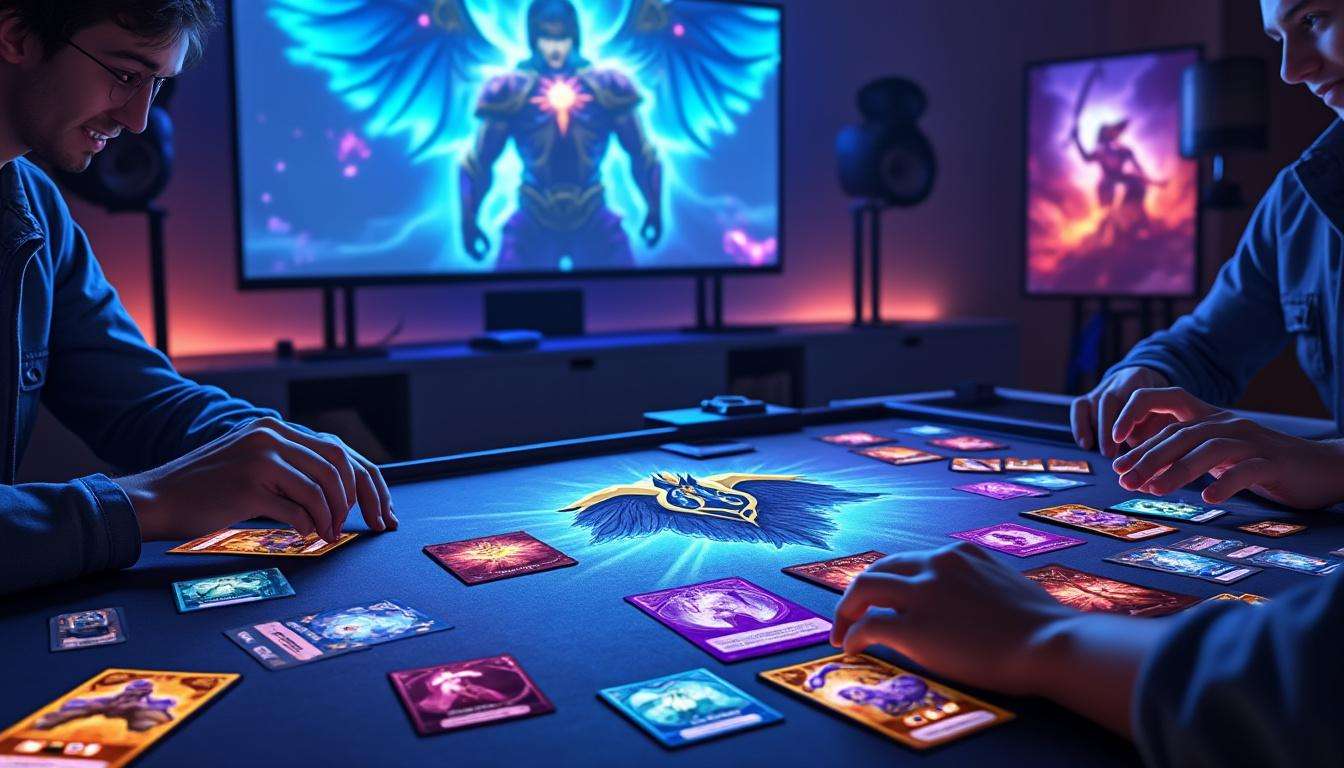
League of Legends: Riftbound brings the MOBA’s tension to the tabletop with a smart mix of objectives, Strategy, and fast turns. This In-Depth Review looks at how the Riftbound Trading Card Game holds up in a crowded TCG market and why it speaks to both esports fans and traditional card gamers.
League of Legends Riftbound Trading Card Game Core Gameplay
The League of Legends Riftbound Trading Card Game does not copy the usual “reduce life to zero” formula. Instead, players fight over three battlefields and race to reach a victory score by controlling objectives. You win by holding or conquering locations, not by burning down a health total.
This core Gameplay loop mirrors classic MOBA pressure. You move units onto lanes, contest control, and push for points. Because of this focus on board states, every decision about where you place a unit or when you challenge a battlefield feels relevant.
Objective-Based Strategy In Riftbound TCG
Riftbound stands out through its objective system. Each battlefield offers effects and risks, and you score when you either conquer or hold it through a full turn. The twist comes from how Showdowns and hidden effects change the fight at the last moment.
Because control matters more than direct damage, Strategy in this TCG leans toward tempo and positioning. You plan two or three turns ahead, bait opponents into bad attacks, and use key reactions to flip a lane at crucial moments. This structure rewards players who enjoy tactical play similar to high-level Esports decision making.
Rune System And Two-Deck Economy In Riftbound
Riftbound uses a split resource system that combines a 40-card main deck with a 12-card rune deck. Runes represent your Domains and provide the Energy and Power needed to play units, spells, and gear. This design improves consistency and reduces bad draws.
Each turn, you gain two runes from your rune deck, then decide which ones to exhaust for raw Energy and which ones to recycle for color-specific Power. Because your resource engine sits outside your main deck, you avoid many dead draws common in older TCGs.
Domain Identities And Color Pair Strategy
Every Legend in Riftbound locks you into two rune colors that define your Domain Identity. Current runes include Fury, Calm, Mind, Body, Chaos, and Order. This color pair controls which cards your deck can run and how your Strategy develops.
Because you only access two colors, deck building feels focused. You make clear trade-offs instead of trying to splash everything. This design gives each Legend and Domain identity a distinct play pattern and supports strong replay value across the Trading Card Game.
Legends, Champions And Deck Building Depth
Riftbound sits between commander-style leaders and classic hero cards. You start with a Legend in your Legend Zone and choose a matching Champion that can join the battlefield later. Both tie directly to your Deck Building choices.
The Legend sets your Domain Identity, while the Champion offers high-impact plays if you time it right. When the Champion hits the trash, it stays there, so you need to treat it as a one-shot power spike instead of a repeatable threat.
Deck Building Examples With Rumble And Fiora
To show how Deck Building influences Gameplay, think of a match between a Mech-focused Rumble deck and a duelist-style Fiora list. Rumble buffs defending Mechs and leans into holding battlefields, while Fiora builds might and presses aggressive Showdowns.
The Rumble deck uses gear like Assembly rigs and Mech tokens to swarm defense zones. Fiora stacks equipment, such as a B.F. Sword, to hit the Might threshold needed to trigger her abilities. Both decks feel coherent and teach new players how synergy matters in a TCG built around lanes and objectives.
- Rumble decks favor Mech units, defensive buffs, and trash recursion to grind value.
- Fiora decks focus on high-Might swings, Equip cards, and precise Showdowns.
- Control-focused lists exploit Hidden and Reaction cards to punish overextension.
- Aggro builds push early battlefield conquests and look to close before late-game engines start.
This contrast shows how Legends and Champions anchor clear archetypes that feel familiar to both MOBA and card game players.
Spiritforged Expansion And Evolving Riftbound Gameplay
With Origins out and Spiritforged in circulation, the Riftbound Trading Card Game has moved beyond “novelty” stage. Spiritforged adds new Legends, Champions, and keywords while keeping the card type structure simple with Units, Spells, and Gear.
Instead of dumping new types on the table, Spiritforged deepens how existing mechanics work. The focus rests on interaction and lane pressure, keeping the original identity of the League of Legends TCG intact.
New Keywords And Tactical Options In Spiritforged
Spiritforged introduces several keywords that shift how players approach Strategy in each match. Ganking, Repeat, Equip, Quick-Draw, Weaponmaster, and Inactive widen the tactical space without bloating rules.
For example, Ganking lets units jump between battlefields, which simulates a jungle roam from the MOBA. Repeat lets you replay specific spells, extending combos for Legends such as Leona, Radiant Dawn. Equip and Weaponmaster deepen gear-focused lines, giving aggressive decks stronger late-game reach.
Players searching for exact keyword details often refer to dedicated resources. A clear breakdown of the expansion’s mechanics is available in the Spiritforged rules and FAQ overview, which helps both casual and competitive players keep up with updates.
Showdowns, Hidden Cards And High-Skill Moments
Riftbound thrives on tense battles for a single lane. When rival units clash over a controlled battlefield, a Showdown starts. During a Showdown, both players gain a window to fire off Reaction cards or flip Hidden effects they planted earlier.
This structure pushes the Trading Card Game toward bluffing and trap-setting. You must track your opponent’s resources and possible reactions, then decide whether the risk of challenging a lane is worth a potential blowout.
Case Study: Minefield, Wages Of Pain And Mech Tokens
Consider a game where a player controls the Minefield battlefield, which forces the conquering side to discard two cards when they take it. A Rumble deck turns this drawback into a weapon by running trash-recursion tools like Assembly rigs and cards that reward discarded Mechs.
Now picture a Fiora deck moving in with a high-Might Champion to seize Minefield. Before the attack, the Rumble player has already placed a Hidden Wages of Pain. Fiora wins the first Showdown, but on the Rumble player’s turn, Wages of Pain triggers and removes her from the field when her stats fall back down.
Ferrous Forerunner’s Deathknell then produces Mech tokens that retake Minefield, scoring a point while stripping Fiora from the board. Moments like this show how Strategy, timing, and knowledge of keywords separate beginners from top-level competitors.
Action Phase And Flow Of Play In Riftbound TCG
Instead of a fixed “combat step,” Riftbound uses an open Action Phase. You and your opponent alternate actions, and you decide when to move, attack, or deploy cards. Attacks on battlefields happen whenever your resources and board state support them.
This flexible flow cuts down on misplays tied to strict phases. You feel closer to a MOBA’s constant skirmish rhythm, where windows of power open and close quickly and you must seize them on the fly.
Resource Management And Late-Game Decisions
Open actions also force tighter resource discipline. You weigh whether to commit runes now or hold them for hidden threats and reactions later in the turn. A single misused spell might expose a battlefield and hand your rival an easy conquer point.
Late in the game, this pressure becomes extreme. In one common scenario, a player at 6 points uses a unit with Ganking and a ready effect from a support card like Bubble Bot to swing and conquer multiple battlefields in one turn. Because a full sweep grants victory, the opponent must plan far ahead to avoid this sudden close-out.
This mix of resource tension, lane control, and surprise multi-lane turns gives Riftbound a unique endgame feel among modern TCGs.
Art, Production Quality And Fantasy Theme
The visual side of Riftbound leans hard into Fantasy inspired by League of Legends and Arcane. Origins reused and adapted existing Riot art, while new pieces arrive with each wave, tying the League of Legends universe to a physical product.
Cards feature clear layouts and different backs for the main and rune decks, which helps table clarity. Card stock feels solid and flexible, a key point for long-time TCG fans who look for durable play pieces.
Fan Service And Collectibility In League Of Legends Riftbound
Riftbound knows its audience. Iconic Legends and Champions from the MOBA appear with dedicated card versions, and special foils or alt-arts provide hooks for collectors. Fans of Arcane recognize faces like Jinx and Jayce, with more fan favorites teased in future product waves.
For players interested in what champions are currently confirmed and how Spiritforged expands the character roster, resources such as the Spiritforged champion list overview give a full picture of the collection side of the TCG. This mix of nostalgia and fresh artwork strengthens the fantasy immersion at the table.
Riftbound’s Place In The Modern TCG And Esports Scene
The mid-2020s brought a flood of TCG releases. In that context, Riftbound needed more than a brand name to survive. Objective-based Gameplay, consistent rune economy, and tight Deck Building rules help it stand out against entrenched giants and new anime-backed products.
The game also mirrors the spirit of Esports. Legends feel like captains of a team, battlefields echo lanes, and keywords such as Ganking translate MOBA actions into physical card effects. For players who follow pro League of Legends or watch tournaments, the pacing feels familiar.
Accessibility For New Players And Long-Term Skill Growth
Despite its depth, Riftbound teaches fast. Most players grasp turn structure and the objective system within 15 minutes, then spend the first evening exploring synergies. Because there are still relatively few sets, the knowledge load stays manageable for newcomers.
At the same time, the interaction density around Showdowns, Hidden effects, and Ganking supports long-term skill growth. The gap between a casual player and a high-level grinder comes from lane evaluation and resource timing instead of obscure rules. This gives the Riftbound Trading Card Game strong potential in both kitchen-table play and organized events anchored around the broader League of Legends community.