

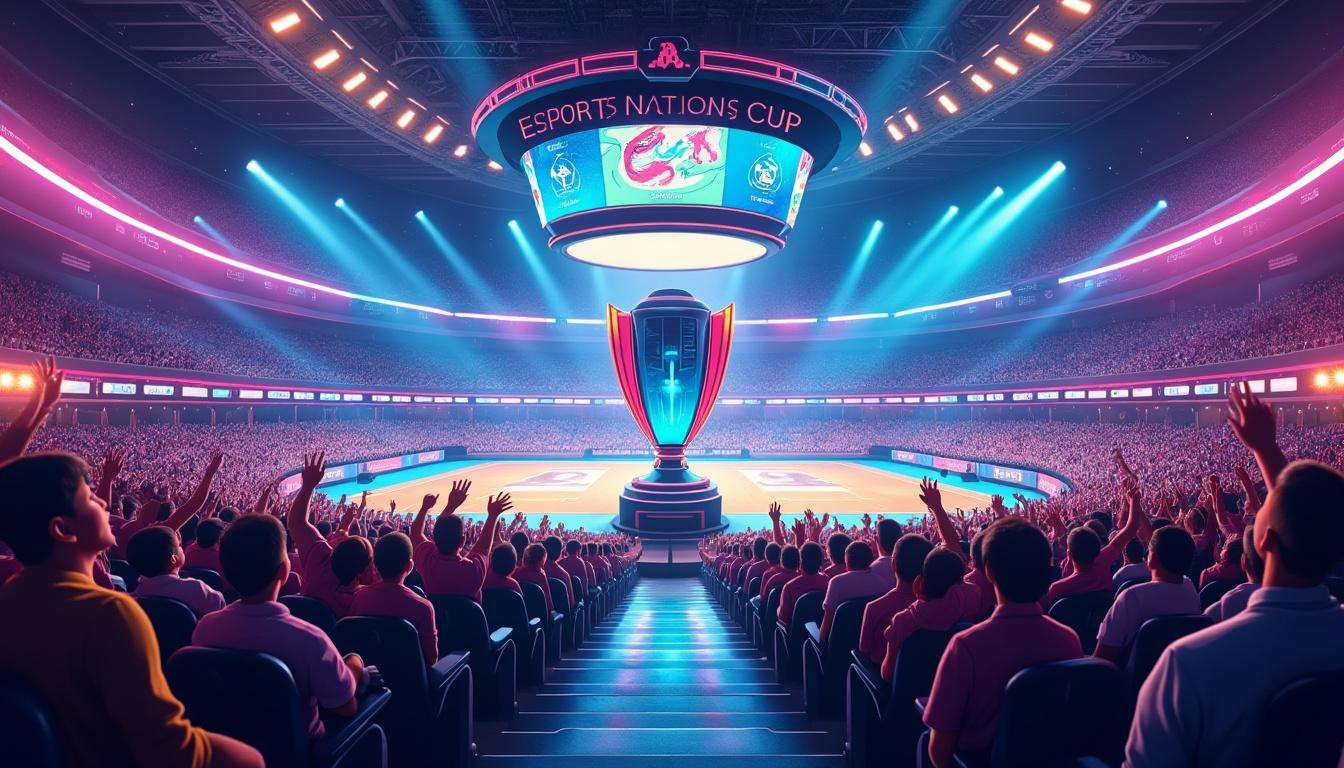
The Esports Nations Cup adds League of Legends as a new contender, turning the event into one of the most stacked international tournaments in competitive gaming. National squads now prepare to face each other on Summoner’s Rift instead of playing under club banners.
League Of Legends Esports Nations Cup Format
The League of Legends Esports Nations Cup event brings between 24 and 32 national teams into one global competition. The structure mirrors other titles in the Nations Cup program, with a mix of direct invites and regional qualifiers.
Top-ranked regions receive direct slots based on recent international results and regional strength. Remaining spots go through online qualifiers, where up-and-coming countries fight for a late ticket to the tournament.
Match days follow a classic multiplayer structure: group stages into knockouts. Best-of-one matches keep the early stages explosive, while playoffs move to longer series to reward depth in champ pools and macro play.
National Teams Instead Of Clubs In League Of Legends
The biggest twist for League of Legends in the Esports Nations Cup is the national team format. Players leave their LEC, LCS, LCK or LPL jerseys at home and line up behind their country’s flag.
Each federation or appointed body builds a roster from the domestic talent pool. Some lineups focus on synergy from one existing roster, others mix star players from different organizations to chase a new superteam identity.
A fictional example helps: a team like “Team Solaria” has three players from the same domestic champion squad, then adds a veteran mid and a rookie support. The mix of synergy and individual star power reflects what many real Nations Cup teams aim for.
Why League Of Legends Fits The Esports Nations Cup
League of Legends esports has run global tournaments for over a decade, from Worlds to MSI. The Nations Cup format adds a new angle that leans into regional identity and long-standing rivalries.
Summoner’s Rift already delivers tight multiplayer competition with clear moments of national pride. Fans remember regional clashes like LCK vs LPL finals or LEC upsets as signature stories. Turning those rivalries into country vs country clashes raises the stakes again.
For the Esports Nations Cup organizers, LoL fills a strategic gap next to titles like Mobile Legends, Counter-Strike 2 and Rainbow Six. It attracts a different audience, thrives in both PC and mobile-focused regions, and has a mature competitive ecosystem.
Riyadh As A Growing Hub For Esports Competition
The Esports Nations Cup takes place in Riyadh, which turns into a major global hub for gaming and live events. Arena setups feature multi-stage designs that host several tournaments at once.
For League of Legends, this means LAN-quality infrastructure, advanced broadcast production and packed local crowds. Organizers mix high-budget stage shows with analytical desks and content segments tailored to each participating country.
This setting pushes national teams to treat the event like a mini-Worlds. Preparation, staff, and scrim schedules reflect that ambition.
How League Of Legends Nations Cup Teams Might Qualify
Qualification for the League of Legends Nations Cup integrates existing regional ecosystems. Major regions receive a number of spots based on depth and international achievements.
Smaller regions rely on dedicated qualifiers, which gives them a clear path to the stage. For example, a region without a franchised league still has open qualifiers where local stacks battle through brackets on weekends.
Selections inside each country follow different models. Some use coaching panels and federation input. Others hold national trials, where multiple lineups scrim and play internal tournaments to decide the final five.
Key Factors In National Team Selection
Coaches punish one-trick behavior in a national squad. The future meta is not locked, so flexible players win spots. Resources like top solo queue champion breakdowns help staff understand which local players thrive on meta picks.
Ping and practice environment matter as well. Players based in strong scrim regions often have an edge thanks to higher practice quality. Even a mechanical prodigy struggles if they lack structured team experience.
On top of that, mental resilience under international pressure plays a major role. Nations want players who handle bright lights and loud arenas without losing shotcalling clarity.
League Of Legends Meta Heading Into The Nations Cup
The League of Legends meta for the Esports Nations Cup depends heavily on the patches rolled out during the second half of the year. Balance changes before Worlds and later updates shape the most effective team styles.
Teams track every patch in detail. Resources like the LoL Patch 26.3 overview and its follow-up Patch 26.4 notes give analysts a roadmap for champions that rise in priority on Summoner’s Rift.
A national roster with flexible champion pools reacts better to these shifts. When a champion like a meta jungler or ADC drops after a nerf, teams need alternatives ready without overhauling their whole style.
Champion Pools And Draft Strategy
Draft strategy in a national tournament differs from club play. Coaching staffs cannot import every synergy from their home organizations, so they focus on champions that multiple players know well across roles.
Identification of priority picks becomes crucial. Tools similar to databases like champion recognition guides help new viewers, while pro teams use far deeper internal data to spot comfort picks and pocket strategies.
The best Nations Cup teams balance meta picks with surprise options. A country that hides one creative strategy for playoffs often swings a full series with a single unexpected draft.
Viewers, Rivalries And Storylines In The Nations Cup
The Esports Nations Cup format for League of Legends builds on years of regional tension. Long-time fans want to see if their country can finally topple dominant regions on neutral ground.
Historic storylines between regions carry over. For example, LCK and LPL representatives still play for pride after years of Worlds finals clashes. European and North American squads look to prove that underdog runs are not one-off miracles.
Newer regions get a rare platform to upset giants in front of a global audience. One strong group stage by a lesser-known country can shift how scouts and organizations view that region for the next few years.
What Makes League Of Legends Nations Cup Matches Unique
Unlike club events, Nations Cup matches often feature teammates who rarely play together during the regular season. This leads to creative strategies and sometimes riskier gameplay.
Players lean into national pride. A single outplay on stage turns into a moment talked about for years in that country’s gaming community. Fans watch not only as supporters of a team, but as supporters of their home flag.
Casters and analysts also adapt. They focus on historical results by country and long-term development, not just on club narratives. The result is a different flavor of League of Legends esports.
How Teams Prepare For The League Of Legends Nations Cup
Serious national teams treat Esports Nations Cup preparation like a mini-bootcamp. Players gather in one location weeks before the competition to build synergy, review VODs and grind scrims.
Coaching staffs track recent international events for patterns. A resource such as a monthly League recap helps highlight rising champions, trending strategies and standout players across regions.
Support staff include analysts, sports psychologists and sometimes language experts when lineups mix players based abroad. Everyone focuses on turning a group of stars into a unified team.
Training Focus For National Squads
Training schedules balance mechanical work with team coordination. Solo queue remains a core tool for individual skill, especially for testing new picks and early item builds.
However, scrims against other national teams or strong club squads matter more for stage readiness. Teams experiment with early-game plans, objective setups and mid-game rotations to find a stable identity.
Staff often set clear practice goals per week. One block might target early dragon control, another focuses on side lane pressure and macro trading. This structure accelerates adaptation to any meta the Nations Cup delivers.
Opportunities And Risks For Pros In The Nations Cup
For players, the League of Legends Esports Nations Cup is more than a single tournament. Strong performances raise their profile with fans, sponsors and international organizations.
A breakout player from a minor region might receive offers from overseas leagues after a standout run. At the same time, veterans from top regions defend their status by delivering consistent, calm performances under pressure.
The main risk lies in schedule overload. Pros juggle domestic leagues, international events, and now national duty. Coaching staffs must track fatigue levels and manage scrim volume carefully.
Impact On Domestic Leagues And Global Esports
Domestic leagues benefit from the Nations Cup spotlight. Fans who watch national matches often return to follow those same players in LEC, LCS, LCK or LPL. This feeds back into regular season viewership and interest in long-term storylines.
The event also gives tournament organizers new data on cross-regional balance. Analysts compare how often each region’s picks and strategies succeed when removed from their home leagues and put onto a neutral stage.
For global esports, the Nations Cup format becomes another anchor event on the calendar next to Worlds. The combination of club and country play strengthens the whole ecosystem.
What Viewers Should Watch For In League Of Legends Nations Cup
For viewers, the League of Legends Nations Cup delivers many layers of storylines and details worth tracking across group and knockout stages.
To keep things simple, focus on a few points throughout the event.
- Draft trends: Which champions see the highest ban and pick rates, and how they differ from club tournaments.
- National rivalries: Historic clashes between regions now playing under country flags.
- Breakout players: New names from smaller regions putting up big performances on stage.
- Adaptation to patches: How quickly each team reacts to balance changes and hotfixes.
- Team synergy: Which national squads look coordinated despite limited time together.
By watching through these lenses, you see the Nations Cup not only as a one-off event but as a signal of where the global League of Legends competition is heading next.